31.08.2026.
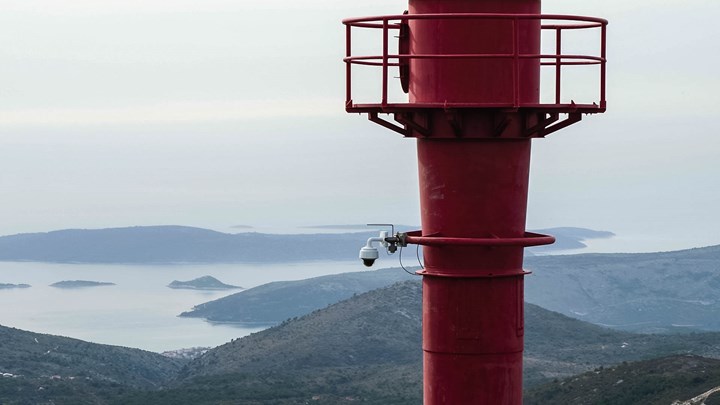
As part of a project implemented by the Ministry of Environmental Protection and Green Transition, OIV has expanded its Fire Detect AI system with 25 new sites and 50 additional surveillance cameras, with a particular focus on protected areas, national parks and nature parks.
The new sites are located across the counties of Dubrovnik-Neretva, Split-Dalmatia, Šibenik-Knin, Zadar, Lika-Senj, Primorje-Gorski Kotar, Istria, Karlovac, Zagreb and Osijek-Baranja. With a total of 143 sites and 282 cameras, OIV’s network now provides comprehensive surveillance along Croatia’s entire coastline.
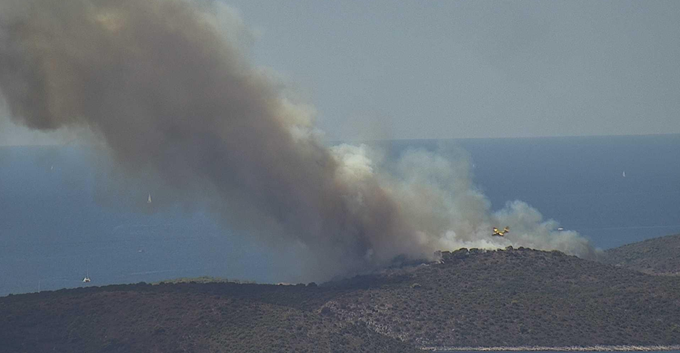
At a time when Croatia is facing an increasing risk of wildfires, the new cameras will enable fires to be detected earlier, their development to be monitored more closely and their potential spread to be assessed. This provides firefighting and emergency services with a stronger basis for taking rapid and effective action on the ground.
OIV Fire Detect AI uses advanced algorithms to automatically identify smoke and flames, enabling potential fires to be detected both during the day and at night. The video surveillance system is designed to operate continuously, 24 hours a day, seven days a week, throughout the year. Live video feeds and data are made available to county-level firefighting operations centres, allowing them to respond quickly when a potential fire is detected.
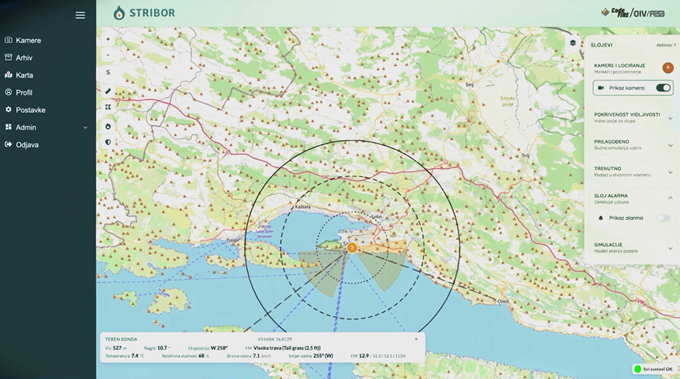
GIS integration is another key feature of the system. It enables alerts to be pinpointed immediately on a digital map and provides operators with a clearer overview of the situation on the ground. Secure, encrypted communication channels ensure reliable access to the system, including via mobile devices.
The system also incorporates meteorological data to support more accurate risk assessments and analysis of fire behaviour and development. This additional information helps operational teams make faster and better-informed decisions. Beyond detecting an active fire, the system can also assess its potential spread, providing firefighters and other emergency services with critical information to support a timely, precise and effective response.
“Modern technology plays a vital role in strengthening our ability to detect wildfires at an early stage and manage them effectively. Through this project, the Ministry of Environmental Protection and Green Transition has recognised the importance of investing in advanced technological solutions that can make a significant contribution to protecting our forests and strengthening Croatia’s resilience to climate-related risks. It is particularly important that the project also focuses on protected areas, where detecting a fire as early as possible is of critical importance. With its communications, technological and infrastructure capabilities, OIV has contributed to the implementation of this important project. By expanding the system, we are further enhancing our ability to detect wildfires at an early stage and contributing to the protection of Croatia’s forests,” said Denis Nikola Kulišić, Chief Executive Officer of OIV.
OIV Fire Detect AI was developed in cooperation with the Faculty of Electrical Engineering, Mechanical Engineering and Naval Architecture (FESB) at the University of Split and was first implemented in 2018 as an intelligent, integrated system for monitoring remote areas and detecting fires at an early stage.
The system has continued to expand since its initial deployment at 40 sites. This latest expansion represents another important step in strengthening Croatia’s national capacity to adapt to climate change. By investing in advanced technological solutions, Croatia is enhancing its ability to monitor and manage climate-related risks while increasing its resilience to extreme weather events and other impacts associated with climate change.
The project is being implemented as part of the establishment of the National Focal Point for the coordinated implementation of climate change adaptation policy. The initiative represents one of the key measures under the Climate Change Adaptation Strategy of the Republic of Croatia through 2040, with a perspective to 2070.